SPACE
One organization.One space to move forward.
SPACE is Titans’ flagship product vision: an organizational cockpit connecting people, systems and AI around the work. Start with Discovery, define a shared workspace and expand through focused modules.
Start with Discovery
Map the people, systems, information and handoffs with a process owner. Select one workflow, a baseline and acceptance criteria. The proposed outcome is a shared process map and an agreed pilot scope.
- Start with Discovery
- Introduce the first module
- Space Code · Planned component
Made for the work.
Changes the way.
Three proposed workflows, beginning with an academic department. Scenarios and images are illustrative.
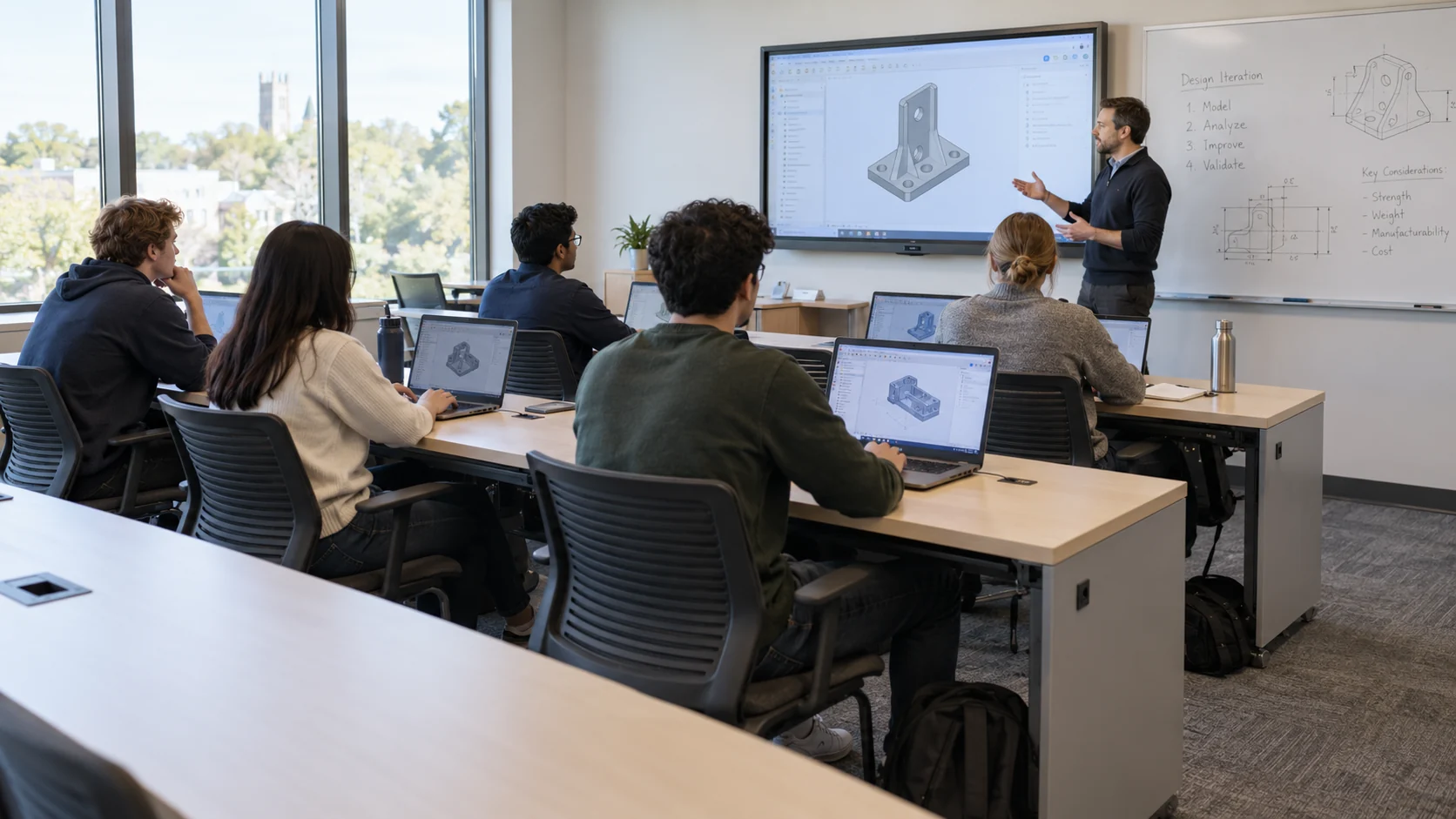
An academic workspace.Start with one department.
- The challenge
- Illustrative academic scenario: faculty and operations staff need a shared way to work with approved departmental materials. No institution or live customer outcome is represented.
- The product at work
- Proposed workflow: select a knowledge task, approved sources, a process owner and an allowed processing route. Prepare a source-linked draft for a person to review before it enters the departmental workflow.
- What changes
- The intended result is a reviewed summary with traceable sources and a clear next step. Any demonstration uses synthetic data; this is not a measured customer result.

One team.A clear next step.
- The challenge
- Illustrative operations scenario: a request crosses teams, documents and systems, making the next owner difficult to identify.
- The product at work
- Proposed workflow: map the handoffs in Discovery, choose one request type and define the sources, reviewers and approvals for the first module.
- What changes
- The intended result is a shared process with a named owner at each step. Integration and execution behavior must be tested within the pilot.
Choose the model.Know the processing route.
- The challenge
- Illustrative AI scenario: teams need to distinguish work suited to local models from work permitted with an external provider.
- The product at work
- Proposed workflow: define model access, allowed information and processing destinations in Space Code. Review usage measures and explicitly handle an unavailable or restricted model.
- What changes
- The intended result is a clear model-use policy. This concept does not prove active model routing, enforced quotas or a production security boundary.
A focused system.
Part of a bigger picture.
SPACE is Titans’ flagship product vision: an organizational cockpit connecting people, systems and AI around the work. Start with Discovery, define a shared workspace and expand through focused modules.
Titans’ role in the engagement
Titans’ FDE teams work with the organization on Discovery, scoping, integration, adoption and review. This is a service engagement: its scope and deliverables are agreed separately from the software capabilities.
01The complete workflow
+
Map the people, systems, information and handoffs with a process owner. Select one workflow, a baseline and acceptance criteria. The proposed outcome is a shared process map and an agreed pilot scope.
Start with Discovery
Map the people, systems, information and handoffs with a process owner. Select one workflow, a baseline and acceptance criteria. The proposed outcome is a shared process map and an agreed pilot scope.
Discovery and one agreed pilot
Define the first workspace
Define roles, approved knowledge sources and system connections for one team. The proposed workspace keeps organizational context, ownership and the next decision together. Availability depends on the agreed implementation.
Approved information and ownership
Introduce the first module
Scope one route from context to a proposal, review, approval and an observable result. People retain responsibility for consequential actions. Test this route before expanding its reach.
Review before consequential action
Measure and expand
Compare the pilot with its acceptance criteria, resolve exceptions and choose the next module. Expansion should reuse the organizational map while checking each new connection and responsibility.
Measure and expand
Compare the pilot with its acceptance criteria, resolve exceptions and choose the next module. Expansion should reuse the organizational map while checking each new connection and responsibility.
02The capabilities inside
+
Start with Discovery
Map the people, systems, information and handoffs with a process owner. Select one workflow, a baseline and acceptance criteria. The proposed outcome is a shared process map and an agreed pilot scope.
- Input
- People, systems, models and workflows
- Output
- Discovery and one agreed pilot
Define the first workspace
Define roles, approved knowledge sources and system connections for one team. The proposed workspace keeps organizational context, ownership and the next decision together. Availability depends on the agreed implementation.
- Input
- Approved information and ownership
- Output
- Define the first workspace
Modules shaped around the work
People, knowledge, resources and operational processes are proposed module areas. ArchiFlow, Zenix, Vector and LinkMatch retain their own identities. Their inclusion in this portfolio does not prove a built-in SPACE integration.
- Input
- Discovery and one agreed pilot
- Output
- Scope one route from context to a proposal, review, approval and an observable result. People retain responsibility for consequential actions. Test this route before expanding its reach.
Space Code · Planned component
Space Code is the planned environment within SPACE for managing local and external models. Model selection, access policy and usage visibility are design requirements; supported providers and enforced controls are not yet verified here.
- Input
- Illustrative AI scenario: teams need to distinguish work suited to local models from work permitted with an external provider.
- Output
- Local hosting does not guarantee local processing. A locally hosted interface may send requests to an external model provider. Define the permitted data, processing destination and fallback behavior before use.
03The information that stays connected
+
For each source, define its owner, version, access rights and permitted uses. Keep client materials, internal knowledge and drafts separate. Retention, deletion and provider data handling require implementation-specific verification.
Approved information and ownership
For each source, define its owner, version, access rights and permitted uses. Keep client materials, internal knowledge and drafts separate. Retention, deletion and provider data handling require implementation-specific verification.
Proposed workflow: select a knowledge task, approved sources, a process owner and an allowed processing route. Prepare a source-linked draft for a person to review before it enters the departmental workflow.
People, systems, models and workflows
Define roles, approved knowledge sources and system connections for one team. The proposed workspace keeps organizational context, ownership and the next decision together. Availability depends on the agreed implementation.
Proposed workflow: map the handoffs in Discovery, choose one request type and define the sources, reviewers and approvals for the first module.
04Connections to your existing systems
+
Approved information and ownership
For each source, define its owner, version, access rights and permitted uses. Keep client materials, internal knowledge and drafts separate. Retention, deletion and provider data handling require implementation-specific verification.
Modules shaped around the work
People, knowledge, resources and operational processes are proposed module areas. ArchiFlow, Zenix, Vector and LinkMatch retain their own identities. Their inclusion in this portfolio does not prove a built-in SPACE integration.
Hosting and processing are separate
Local hosting does not guarantee local processing. A locally hosted interface may send requests to an external model provider. Define the permitted data, processing destination and fallback behavior before use.
05Permissions, control and exceptions
+
Review before consequential action
Define who may propose, review, approve and execute each action. Permissions, audit records and isolation are requirements to test in the target environment, not security guarantees made by this page.
Hosting and processing are separate
Local hosting does not guarantee local processing. A locally hosted interface may send requests to an external model provider. Define the permitted data, processing destination and fallback behavior before use.
Define usage before budgets
Requests, input and output tokens, API charges and local infrastructure costs are different measures. Usage reporting and quotas are proposed requirements, not verified billing or enforcement capabilities. Attribute usage to each user, team and model over a day, month or agreed reporting period, with a defined time zone and reset date. Agree quotas, alert thresholds and the response to a limit before the pilot.
When things do not go to plan
The public concept uses synthetic data and simulated actions. It does not demonstrate production availability. Modules, integrations, models and controls must be verified for each implementation.
A source is missing
The proposed workflow pauses for missing or unauthorized information. A process owner resolves the gap before the draft is used.
A model is unavailable
The proposed policy calls for a visible failure state. Any alternative processing route needs explicit authorization; local processing must not silently switch to an external provider.
A usage limit is reached
Agree what is measured and what should happen at a limit. Quota alerts, blocking and budget enforcement require a tested implementation before being presented as available.
06Implementation and organizational fit
+
Start with Discovery
Map the people, systems, information and handoffs with a process owner. Select one workflow, a baseline and acceptance criteria. The proposed outcome is a shared process map and an agreed pilot scope.
Define the first workspace
Define roles, approved knowledge sources and system connections for one team. The proposed workspace keeps organizational context, ownership and the next decision together. Availability depends on the agreed implementation.
Introduce the first module
Scope one route from context to a proposal, review, approval and an observable result. People retain responsibility for consequential actions. Test this route before expanding its reach.
Measure and expand
Compare the pilot with its acceptance criteria, resolve exceptions and choose the next module. Expansion should reuse the organizational map while checking each new connection and responsibility.
The deployment environment
- Review before consequential action
- Define who may propose, review, approve and execute each action. Permissions, audit records and isolation are requirements to test in the target environment, not security guarantees made by this page.
- Hosting and processing are separate
- Local hosting does not guarantee local processing. A locally hosted interface may send requests to an external model provider. Define the permitted data, processing destination and fallback behavior before use.
- Define usage before budgets
- Requests, input and output tokens, API charges and local infrastructure costs are different measures. Usage reporting and quotas are proposed requirements, not verified billing or enforcement capabilities. Attribute usage to each user, team and model over a day, month or agreed reporting period, with a defined time zone and reset date. Agree quotas, alert thresholds and the response to a limit before the pilot.
Product vision · Proposed workflow
The public concept uses synthetic data and simulated actions. It does not demonstrate production availability. Modules, integrations, models and controls must be verified for each implementation.
Hosting and processing are separate
Local hosting does not guarantee local processing. A locally hosted interface may send requests to an external model provider. Define the permitted data, processing destination and fallback behavior before use.
Titans’ role in the engagement
Titans’ FDE teams work with the organization on Discovery, scoping, integration, adoption and review. This is a service engagement: its scope and deliverables are agreed separately from the software capabilities.
07Questions of fit
+
What is available today?
The public concept uses synthetic data and simulated actions. It does not demonstrate production availability. Modules, integrations, models and controls must be verified for each implementation.
Space Code · Planned component
Space Code is the planned environment within SPACE for managing local and external models. Model selection, access policy and usage visibility are design requirements; supported providers and enforced controls are not yet verified here.
Hosting and processing are separate
Local hosting does not guarantee local processing. A locally hosted interface may send requests to an external model provider. Define the permitted data, processing destination and fallback behavior before use.
Titans’ role in the engagement
Titans’ FDE teams work with the organization on Discovery, scoping, integration, adoption and review. This is a service engagement: its scope and deliverables are agreed separately from the software capabilities.
08Documentation and further reading
+
Connect it to your work.
Start with one workflow, its information and the people who know it. Define the path to implementation together.